

Genomische Pathologie
Cancer genomics to understand tumor characteristics and vulnerabilities
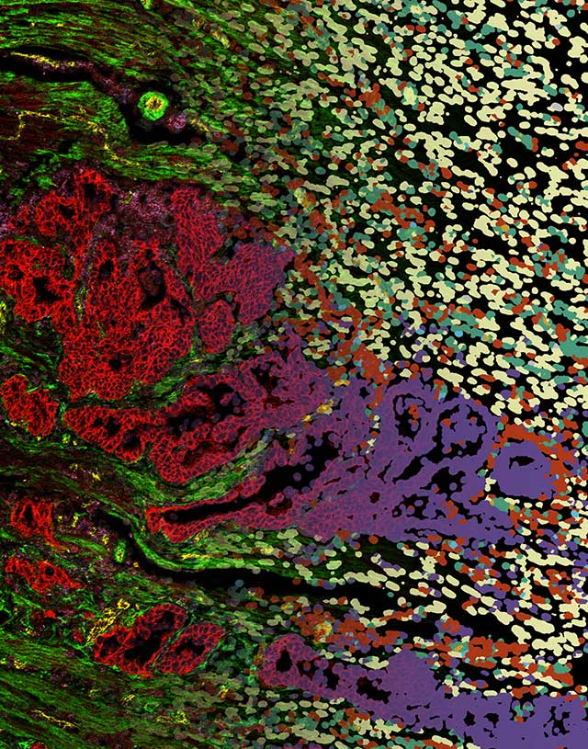
Genomic studies have identified new mechanisms that underlie the development of cancer and revealed targets for novel therapies. In addition, systematic genomics allow us to understand the context in which cancer driver mutations occur. Together with transcriptomic and epigenetic analyses, cancer entities are nowadays classified by their molecular features. In addition to the mutated cancer cells, other cellular compartments of solid tumors, including cancer associated fibroblasts and immune cells influence the clinical behavior of cancer patients.
Our lab uses next generation sequencing approaches to characterize cancer on the genomic, transcriptomic and epigenetic level. Using integrative analyses, we try to find molecular patterns that correlate with and potentially explain the different clinical categories of patients. We aim at identifying pathways that are altered in the different compartments of the tumor, including the stroma, that provide potential new targets for intervention.




Lab Members
Vanessa Richartz, technical assistant
Barbara Holz, technical assistant
Hannah Demond, postdoctoral researcher
Dr. nat. med. Sonja Meemboor, postdoctoral researcher
Dr. (PhD) Ali Yazbeck, postdoctoral researcher
Dr. nat. med. Tabea Gewalt, postdoctoral researcher
Julia Wiggeshoff, bioinformatician
Sai Kirti Krishnan Murali, PhD student
Mohammad Ali (Shahrokh) Karimpour, PhD student
Ruth Bakemeier, MD student
Patrizia Pauls, MD student
German Research Foundation (DFG): International Research Training Group (IRTG) "Tumor Heterogeneity and Genomic Instability in Lung Cancer - From Basic Mechanisms to Clinical Implications", subproject “Genomic instability influenced by metabolic switch after NRF2 activation in LUAD”
Marga und Walter Boll-Stiftung: „Sex chromosome-specific molecular alterations in esophageal adenocarcinoma“
Center for Molecular Medicine Cologne (CMMC) - Project A 03 – "Developing New Treatment Concepts for KEAP1-mutated Lung Adenocarcinoma"